Description
What Is Lucky Strain?
Lucky is a cannabis cultivar documented in strain databases as an indica-dominant hybrid associated with Ice Cream Cake × Sunset Sherbet genetics. Leafly lists myrcene as its dominant terpene, with caryophyllene and humulene also reported. Consumer descriptions commonly mention a combination of relaxing, uplifting and tingly characteristics.
It is worth remembering that strain names are not always standardised across growers and markets. Different phenotypes or products sold under the same name can have noticeably different cannabinoid and terpene profiles. For that reason, laboratory information for the specific product is more useful than relying on the strain name alone.
Key Features of Lucky Strain
Lucky is generally associated with:
- Indica-dominant hybrid characteristics
- Ice Cream Cake and Sunset Sherbet lineage
- Myrcene-forward terpene profiles
- Diesel, lemon and chemical flavour descriptions
- Earthy, herbal and peppery aromatic undertones
- Reported relaxing and uplifting sensations
Reported effects are based largely on consumer experiences rather than guaranteed outcomes. Leafly users have commonly described Lucky as tingly, energetic and relaxed, while dry mouth, dry eyes and anxiety are among the reported unwanted effects.

Design and Appearance
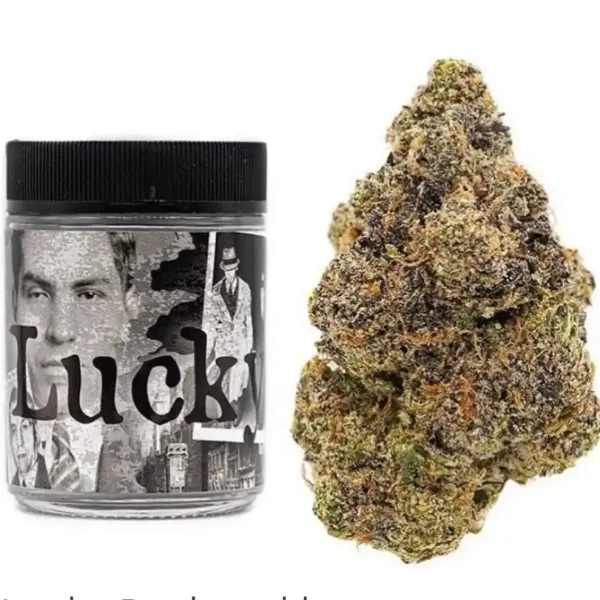
Descriptions of Lucky flower commonly focus on dense, resin-rich buds with green colouring and prominent trichomes. Orange or copper-coloured pistils may contrast with the flower’s darker green tones.
Appearance alone, however, should not be treated as proof of potency or quality. Growing conditions, harvesting, drying, curing and storage can all affect the final appearance and aroma.
Flavour of Lucky Strain
Lucky has a distinctive flavour profile. Commonly documented notes include diesel, chemical and lemon, creating a sharp combination of fuel-like depth and citrus brightness. Myrcene may contribute earthy and herbal qualities, while caryophyllene can add a peppery character and humulene an earthy, woody element.
Some descriptions also report tropical fruit and apricot nuances, demonstrating why experiences can differ between phenotypes and batches.
Why Users Choose Lucky
People interested in Lucky often focus on its distinctive terpene character and the contrast between citrus-forward notes and deeper diesel aromas. Others are interested in its reported combination of uplifting and relaxing sensations.
These descriptions should not be interpreted as medical claims. Cannabis can affect individuals differently, and THC-containing products can cause unwanted effects such as anxiety, dizziness, impaired concentration or dry mouth.
Practical Tips for Users
If discussing or researching Lucky, consider the following:
- Check the exact product information. Look for independent laboratory testing where legally applicable.
- Pay attention to cannabinoid content. THC concentration can vary considerably between products.
- Look beyond the strain name. Terpene and cannabinoid results provide more useful information about a particular batch.
- Store products appropriately. Heat, light, oxygen and moisture can affect cannabinoid and terpene stability.
- Do not drive after using intoxicating cannabis. Impairment can affect reaction time, judgement and coordination.
- Understand UK law. Cannabis is a Class B controlled drug in the UK. Possession, production and supply can constitute criminal offences, subject to specific legal exceptions.
Final Thoughts
Lucky is an interesting cultivar because of its combination of documented Ice Cream Cake and Sunset Sherbet genetics, myrcene-led terpene profile and distinctive diesel, lemon and chemical flavour descriptions.
However, strain names should never be treated as a guarantee of a particular experience. Cultivation methods, phenotype, laboratory results and individual sensitivity can all influence the final product.
For readers in the UK, the legal position is particularly important. Cannabis remains controlled under UK drug legislation, while authorised cannabis-based medicinal products operate under specific regulatory requirements.




Reviews
There are no reviews yet.